Do you find one type of strings stay in tune better than others on lap steel?

Lap steels, resonators, multi-neck consoles and acoustic steel guitars

Moderator: Brad Bechtel

User avatar
David DeLoach
Posts: 566
Joined: 9 Feb 2016 8:27 am
Location: Tennessee, USA

Do you find one type of strings stay in tune better than others on lap steel?

Post by David DeLoach »

I've got a high end cast aluminum lap steel that tends to go out of tune fairly quickly.

I've put graphite on the nut and bridge, and stretch the strings out pretty good, but they still go up to 9 cents sharp or flat in a matter of minutes.

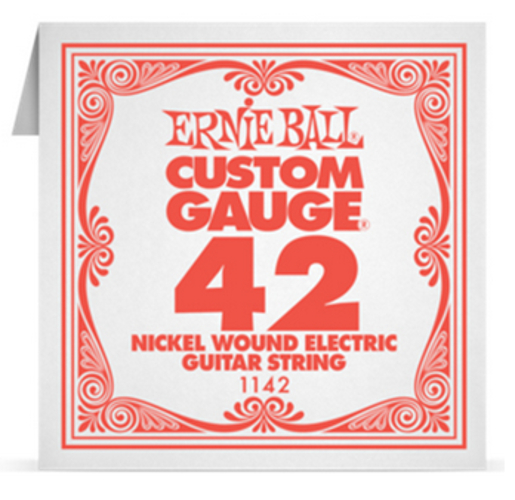
I'm using Ernie Ball electric guitar strings on it.

Thanks!
Image
User avatar
Stanislav Paskalev
Posts: 38
Joined: 18 Jan 2025 8:20 am
Location: Bulgaria

Re: Do you find one type of strings stay in tune better than others on lap steel?

Post by Stanislav Paskalev »

It is quite possible that the entire aluminum body expands or shrinks based on the air temperature and your body heat, therefore affecting the tuning. Mine are all wooden ones and I haven't seen that big of a difference after the strings have settled in. (pyramid 8-string set for lap)
My current preferred tunings: Bb-C-Db-E-G-A-B-D on 8 strings and C-E-G-A-B-D on 6 strings
D Schubert
Posts: 1207
Joined: 27 Jul 2000 12:01 am
Location: Columbia, MO, USA

Re: Do you find one type of strings stay in tune better than others on lap steel?

Post by D Schubert »

According to musical legend, Les Paul's aluminum bodied electric guitar ("the log") was plagued with tuning problems. When he played on a stage with a bright spotlight, that was enough to cause the aluminum to expand and throw the whole thing out of tune within the span of a single song.
GFI Expo S-10PE, Sho-Bud 6139, Fender 2x8 Stringmaster, Supro consoles, Dobro. And more.
User avatar
George Piburn
Posts: 2164
Joined: 1 Jul 2003 12:01 am
Location: The Land of Enchantment New Mexico

Re: Do you find one type of strings stay in tune better than others on lap steel?

Post by George Piburn »

I've been a D'Addario OEM Dealer and loyalist for over 30 years,

i've built and sold hundreds of Lap Steels Worldwide all come with our custom gauged sets as a standard.

GeorgeBoards™ stands by American Made D'Addario.
User avatar
Mike Neer
Posts: 11470
Joined: 9 Dec 2002 1:01 am
Location: NJ

Re: Do you find one type of strings stay in tune better than others on lap steel?

Post by Mike Neer »

Do you use a stand or play on the lap?
Links to streaming music, websites, YouTube: Links
User avatar
Bill Groner
Posts: 1396
Joined: 30 Dec 2016 8:42 am
Location: QUAKERTOWN, PA

Re: Do you find one type of strings stay in tune better than others on lap steel?

Post by Bill Groner »

I use SIT strings C6 tuning on all my steels. I have never tried any other brand of strings. 3 steels are maple, 3 are 6061 aluminum. The wood steels stay almost in tune all year long.
By almost I mean very close to being spot on. The aluminum ones aren't bad, but you have to figure if you tuned them while they were on your lap and "warmed up" they will be one thing. If you pull one out of it's stand at room temperature, chances are it will be a little flat until it reaches the previous "warm up" temperature you tuned it at. 70* vs 98.6* (that's a big difference)

Most pedal steels use aluminum for the body. I figured there had to be some merit to this. It was the reason I built 3 of mine out of aluminum. There is a reason, pedal steels have a unique voice aside from the pedals and knee levers. I really think aluminum is superior to wood, for a lot of reasons. My aluminum ones are clad top and bottom with 3mm acrylic, which I think helps to aid the keeping the temperature more stable. (insulation) So, I guess I think maybe the material your steel is made from has more to do with strings staying in tune?
:eek:
Last edited by Bill Groner on 12 Dec 2025 1:05 pm, edited 1 time in total.
Currently own, 6 Groner-tone lap steels, 1953 Alamo Lap steel, (a gift from the late Stu Schulman) Recording King Phil Leadbetter Dobro, Roland Cube, Roland Mobile Cube, Fender Champion 40
User avatar
David DeLoach
Posts: 566
Joined: 9 Feb 2016 8:27 am
Location: Tennessee, USA

Re: Do you find one type of strings stay in tune better than others on lap steel?

Post by David DeLoach »

Mike Neer wrote: 10 Dec 2025 9:36 am Do you use a stand or play on the lap?
I play it in my lap.

For some reason I'm cool with my Stringmaster on its 4 legs, but I prefer my lap steels not be on a stand. But I'll give playing on a stand a try and see if it makes a difference.

Thanks!
User avatar
Paul Seager
Posts: 528
Joined: 20 Aug 2010 7:41 am
Location: Augsburg, Germany

Re: Do you find one type of strings stay in tune better than others on lap steel?

Post by Paul Seager »

I used D'Addario for many years and Pyramid since 2016. They both offer perfectly stable tuning on my lap-steels, all of which are wooden.

I also play bass and have a classic Fender, it's perfectly stable, rarely needs more than a tweak to tune. My other bass is a high-end 6 string, with a thru neck made from a lot of Wenge. Apparently a very hard wood but, not only is this bass regularly out of tune, the truss rod needs constant attention! It is extremely sensitive to temperature and humidity changes.

So to return to your point, I think the construction material is the source of the problem rather than strings.
\paul
User avatar
Erv Niehaus
Posts: 27174
Joined: 10 Aug 2001 12:01 am
Location: Litchfield, MN, USA

Re: Do you find one type of strings stay in tune better than others on lap steel?

Post by Erv Niehaus »

I don't think the problem with the strings.
I've used Ernie Ball strings for years on my lap and console guitars.
It has to do with the expansion and contraction of the aluminum.
User avatar
Michael Kiese
Posts: 382
Joined: 17 Jul 2023 12:27 pm
Location: Richmond, Virginia (Hometown: Pearl City, HI)

Re: Do you find one type of strings stay in tune better than others on lap steel?

Post by Michael Kiese »

Just adding my 2¢ for the good of the discussion.

I do notice that I experience similar tuning issues during the winter when it gets cold. Not so much in the Spring, Summer, or Fall.

Funny thing is, my A22 and A25 don't really have that problem. My Rickenbacher ACE does, which is Bakelite. lol. Go figure.

I will say though, that when it gets in the 30's (ºF), that cold aluminum on your lap is REALLY cold. lol. It's a heat sink. haha. I have an 8 string Van Der Donck. It has a wide and flat neck contour. That sucker sucks ALL the warmth from your lap if it's cold. Feels like a block of ice.

The weird thing is, that if metal gets cold, it should shrink, so it should consistently make your strings go flat. But the fact that sometimes the strings go sharp OR flat is very intriguing indeed. You'd think that going sharp would correlate with heat. But for that to happen, the aluminum should have to increase significantly in temperature in a short amount of time. I'm skeptical if body heat alone is capable of doing that. It's not like the entire aluminum body will warm to 98.6 ºF, only the parts that come in contact with your lap will warm up. The rest of the aluminum body will remain cold.

The phenomenon David's experiencing of going either sharp OR flat after tuning is VERY puzzling, indeed.

Here's my take: always tune UP to the note, that way the tuning machine is in a tight state. If you tune DOWN to the note, then the tuning machine is not in a tight state and can possibly go slack a bit. If you consistently tune UP to your notes, and they still go sharp or flat, I don't know what it could really be. Assuming you're playing in your lap, the aluminum body can't cool down or warm up fast enough to affect a difference of 9 cents in pitch. I'm very skeptical. I got a hunch that it may be something else.

David: get a magnifying glass and look over the bridge and saddle section first. It is possible that there may be hairline cracks or small gaps that are accounting for the tuning instability.

Body heat and weather may indeed be a factor, but I'm not convinced that they're the main issue alone.

If tuning UP doesn't fix the problem, and you can't find any cracks or defects in the aluminum, maybe consider contacting the maker of the instrument. They may have some insight.

Maybe Rick Aiello should chime in. He may have some ideas.

Good luck!
Aloha,

Mike K

🤙🏽 🤙🏽 🤙🏽 🌴 🌴 🌴

1932 A22 Rickenbacher Frypan (C6), 1937 7string Prewar Rickenbacher Bakelite (C Diatonic), 1937 7string Epiphone Electar (Jerry Byrd's E9), 1937 Epiphone Electar (C#m9), 1940's Post War Rickenbacher Bakelite (Feet's D), 1950 Supro (Open F), 1950's Rickenbacher ACE (C6), 1950's Rickenbacher A25 Frypan (A6), 1957 National New Yorker (Jerry's E13), 1955 Q8 Fender Stringmaster (A6, C6, Noel's E13, C Diatonic), 1961 Supro (Open A), 8string VanderDonck Frypan (Buddy Emmons's C6).
User avatar
Rick Aiello
Posts: 4945
Joined: 11 Sep 2000 12:01 am
Location: Berryville, VA USA

Re: Do you find one type of strings stay in tune better than others on lap steel?

Post by Rick Aiello »

The Coefiicients of Thermal Expansion for various materials are given here:

https://www.engineeringtoolbox.com/amp/ ... -d_95.html

Aluminum and Bakelite have greater coefficients (expand/contracting more) than steel … so as temperature changes the strings are expanding/contracting at a different rate than the guitar body is …

I find D’Adarrio NYXL strings hold their tune pretty well … The SGF store sells singles
User avatar
Bill Groner
Posts: 1396
Joined: 30 Dec 2016 8:42 am
Location: QUAKERTOWN, PA

Re: Do you find one type of strings stay in tune better than others on lap steel?

Post by Bill Groner »

Mike, I believe you might have misunderstood the temp differences. ( It's not like the entire aluminum body will warm to 98.6 ºF, only the parts that come in contact with your lap will warm up. The rest of the aluminum body will remain cold.) I was only stating that since there is a difference in temps some of it will transfer to the steel and expand the body. I don't think the movement has to be very much for the change to take place. As an experiment, one cold winter night (single digits) nature called. I answered the call and couldn't wait to get back under the covers. I looked at the steel I had sitting on my desk and stuck the tuner on it. FLAT. I put it under the covers with me, but not touching me. In about a half hour I put the tuner on it, and it was perfect, spot on! I did nothing else, just warmed it up probably a degree or two. I agree with Mike's statement about always tuning up the the note to get rid of the slop in the tuners.
Currently own, 6 Groner-tone lap steels, 1953 Alamo Lap steel, (a gift from the late Stu Schulman) Recording King Phil Leadbetter Dobro, Roland Cube, Roland Mobile Cube, Fender Champion 40
User avatar
Michael Kiese
Posts: 382
Joined: 17 Jul 2023 12:27 pm
Location: Richmond, Virginia (Hometown: Pearl City, HI)

Re: Do you find one type of strings stay in tune better than others on lap steel?

Post by Michael Kiese »

Bill Groner wrote: 13 Dec 2025 3:56 am Mike, I believe you might have misunderstood the temp differences. ( It's not like the entire aluminum body will warm to 98.6 ºF, only the parts that come in contact with your lap will warm up. The rest of the aluminum body will remain cold.) I was only stating that since there is a difference in temps some of it will transfer to the steel and expand the body. I don't think the movement has to be very much for the change to take place. As an experiment, one cold winter night (single digits) nature called. I answered the call and couldn't wait to get back under the covers. I looked at the steel I had sitting on my desk and stuck the tuner on it. FLAT. I put it under the covers with me, but not touching me. In about a half hour I put the tuner on it, and it was perfect, spot on! I did nothing else, just warmed it up probably a degree or two. I agree with Mike's statement about always tuning up the the note to get rid of the slop in the tuners.
Hey Bill,

That's very interesting! I didn't think the heat transfer from your lap to the aluminum body would be significant enough to cause thermal expansion/contraction. Perhaps it is. That's very interesting and insightful.

Given Rick's response, the string metal is likely expanding/contracting at a different rate than the body material. That could account for strings actually going sharp. As ambient temperatures increase, the body could theoretically expand faster than the strings do. Interesting phenomenon because the strings have much less thermal mass than the body, so that offsets the thermal expansion coefficient. But the phenomenon is still happening, regardless.

String physics is so interesting.

Worth some at home experimentation!

Thanks for the discussion!
Aloha,

Mike K

🤙🏽 🤙🏽 🤙🏽 🌴 🌴 🌴

1932 A22 Rickenbacher Frypan (C6), 1937 7string Prewar Rickenbacher Bakelite (C Diatonic), 1937 7string Epiphone Electar (Jerry Byrd's E9), 1937 Epiphone Electar (C#m9), 1940's Post War Rickenbacher Bakelite (Feet's D), 1950 Supro (Open F), 1950's Rickenbacher ACE (C6), 1950's Rickenbacher A25 Frypan (A6), 1957 National New Yorker (Jerry's E13), 1955 Q8 Fender Stringmaster (A6, C6, Noel's E13, C Diatonic), 1961 Supro (Open A), 8string VanderDonck Frypan (Buddy Emmons's C6).
User avatar
David DeLoach
Posts: 566
Joined: 9 Feb 2016 8:27 am
Location: Tennessee, USA

Re: Do you find one type of strings stay in tune better than others on lap steel?

Post by David DeLoach »

OK, may have found the solution.

Yesterday I got an old 1 x 6 board out of the garage, cleaned it up, and laid my in tune cast aluminum lap steel on in over night (as opposed to leaning against my desk with only the butt and headstock in contact with supports). Then this morning I set the board, with the lap steel on it, on my lap and it was pretty much still in tune. I reached for my tone bar and noticed it felt cold, so I put it in the pocked of jeans for a few minutes until it warmed up. Then I played a couple of tunes and my lap steel was still pretty much in tune.

I may cut out a template of my lap steel on a 1 x 6 and start using it.

I guess the other solution would be to keep the temperature in my music room to 98.6 degrees (body temp), but don't think I'll go that route. :D

EDIT: I tried a folded quilt between by legs and the steel and it seems to have the same positive impact on tuning
Glenn Wilde
Posts: 956
Joined: 4 Oct 2019 7:47 am
Location: California, USA

Re: Do you find one type of strings stay in tune better than others on lap steel?

Post by Glenn Wilde »

David DeLoach wrote: 13 Dec 2025 5:59 am OK, may have found the solution.

Yesterday I got an old 1 x 6 board out of the garage, cleaned it up, and laid my in tune cast aluminum lap steel on in over night (as opposed to leaning against my desk with only the butt and headstock in contact with supports). Then this morning I set the board, with the lap steel on it, on my lap and it was pretty much still in tune. I reached for my tone bar and noticed it felt cold, so I put it in the pocked of jeans for a few minutes until it warmed up. Then I played a couple of tunes and my lap steel was still pretty much in tune.

I may cut out a template of my lap steel on a 1 x 6 and start using it.

I guess the other solution would be to keep the temperature in my music room to 98.6 degrees (body temp), but don't think I'll go that route. :D

EDIT: I tried a folded quilt between by legs and the steel and it seems to have the same positive impact on tuning
You may be on to something, I have slatwall hangers in my music room and have a couple guitars that become tuning nightmares if I hang them by their necks, if I keep them on stands or in the case they're fine.
User avatar
Michael Kiese
Posts: 382
Joined: 17 Jul 2023 12:27 pm
Location: Richmond, Virginia (Hometown: Pearl City, HI)

Re: Do you find one type of strings stay in tune better than others on lap steel?

Post by Michael Kiese »

Glenn Wilde wrote: 13 Dec 2025 8:39 am
David DeLoach wrote: 13 Dec 2025 5:59 am OK, may have found the solution.

Yesterday I got an old 1 x 6 board out of the garage, cleaned it up, and laid my in tune cast aluminum lap steel on in over night (as opposed to leaning against my desk with only the butt and headstock in contact with supports). Then this morning I set the board, with the lap steel on it, on my lap and it was pretty much still in tune. I reached for my tone bar and noticed it felt cold, so I put it in the pocked of jeans for a few minutes until it warmed up. Then I played a couple of tunes and my lap steel was still pretty much in tune.

I may cut out a template of my lap steel on a 1 x 6 and start using it.

I guess the other solution would be to keep the temperature in my music room to 98.6 degrees (body temp), but don't think I'll go that route. :D

EDIT: I tried a folded quilt between by legs and the steel and it seems to have the same positive impact on tuning
You may be on to something, I have slatwall hangers in my music room and have a couple guitars that become tuning nightmares if I hang them by their necks, if I keep them on stands or in the case they're fine.
Fascinating insight.

Seems like the 1x6 board and the quilt are acting like a thermal break between your legs and the aluminum body. That thermal break is inhibiting heat transfer.

Therefore, how the steel is stored is probably not the issue. The heat transfer from your body to the instrument is the issue. That's where the thermal break comes into play.

Maybe in Glenn's scenario, hanging on the wall makes the guitars significantly colder than they would be if they were left in their case, or on a stand. Must be a really cold wall.
Aloha,

Mike K

🤙🏽 🤙🏽 🤙🏽 🌴 🌴 🌴

1932 A22 Rickenbacher Frypan (C6), 1937 7string Prewar Rickenbacher Bakelite (C Diatonic), 1937 7string Epiphone Electar (Jerry Byrd's E9), 1937 Epiphone Electar (C#m9), 1940's Post War Rickenbacher Bakelite (Feet's D), 1950 Supro (Open F), 1950's Rickenbacher ACE (C6), 1950's Rickenbacher A25 Frypan (A6), 1957 National New Yorker (Jerry's E13), 1955 Q8 Fender Stringmaster (A6, C6, Noel's E13, C Diatonic), 1961 Supro (Open A), 8string VanderDonck Frypan (Buddy Emmons's C6).
User avatar
Michael Kiese
Posts: 382
Joined: 17 Jul 2023 12:27 pm
Location: Richmond, Virginia (Hometown: Pearl City, HI)

Re: Do you find one type of strings stay in tune better than others on lap steel?

Post by Michael Kiese »

Funny thing: I'm headed out the door right now to go sit in with some Hawaiian musicians at a Mele Kalikimaka event at a brewery.

It's COLD out! lol.

Thanks to this thread, I think I'll bring a small blanket and use it as a thermal break.

I'll keep my legs warm AND hopefully stay in tune better. it's a Win Win! lol.

If anybody teases me for being cold, I'll just say "It's to make the steel stay in tune better!" LOL.
Aloha,

Mike K

🤙🏽 🤙🏽 🤙🏽 🌴 🌴 🌴

1932 A22 Rickenbacher Frypan (C6), 1937 7string Prewar Rickenbacher Bakelite (C Diatonic), 1937 7string Epiphone Electar (Jerry Byrd's E9), 1937 Epiphone Electar (C#m9), 1940's Post War Rickenbacher Bakelite (Feet's D), 1950 Supro (Open F), 1950's Rickenbacher ACE (C6), 1950's Rickenbacher A25 Frypan (A6), 1957 National New Yorker (Jerry's E13), 1955 Q8 Fender Stringmaster (A6, C6, Noel's E13, C Diatonic), 1961 Supro (Open A), 8string VanderDonck Frypan (Buddy Emmons's C6).
User avatar
Bill Groner
Posts: 1396
Joined: 30 Dec 2016 8:42 am
Location: QUAKERTOWN, PA

Re: Do you find one type of strings stay in tune better than others on lap steel?

Post by Bill Groner »

Just tell them you came from Hawaii! They will understand.
Currently own, 6 Groner-tone lap steels, 1953 Alamo Lap steel, (a gift from the late Stu Schulman) Recording King Phil Leadbetter Dobro, Roland Cube, Roland Mobile Cube, Fender Champion 40